


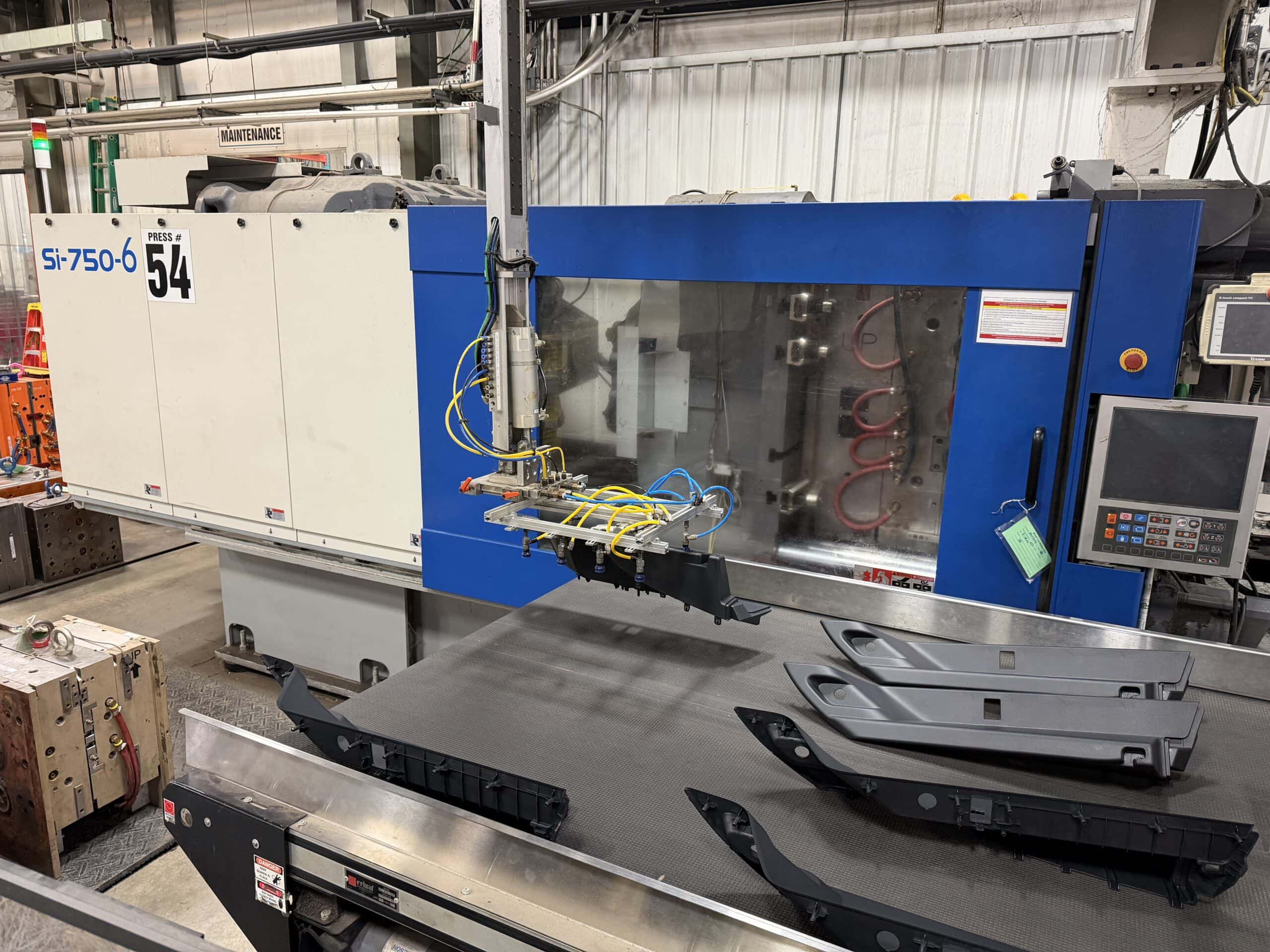
The equipment you select for a molding job is never a secondary consideration. From the press on the floor to the mold sitting inside it, every decision in the equipment chain has a direct, measurable impact on the quality of the final part.
Quality: Is It the Injection Molding Machine or the Manufacturer?
There’s no getting around it: precision plastic products require precision injection molding equipment.
However, that’s not to say that the equipment solely makes the manufacturer. The processes in place are just as important…from the actual molding process to the subsequent quality control program. And it goes without saying that the quality of the mold tooling you use is largely responsible for the quality of the end product.
So those are the basics: long story short, proper injection molding equipment selection is critical. Learn more about why, and which manufacturing parameters to look out for below.
Press Selection: Matching the Machine to the Job
Not every injection molding press is built for every application. At WCPI, we operate presses capable of clamping forces ranging from 50 to 750 metric tons. Our facility includes a wide tonnage range for good reason.
Selecting the right press type starts with understanding the part. A small, tight-tolerance medical component and a large automotive housing panel don’t belong in the same machine. The wrong press introduces variability into every shot. Inconsistent injection speed, inadequate barrel capacity, or a machine that’s simply too large for the mold can all result in short shots and incomplete fill, excessive flash at the parting line, inconsistent wall thickness, and cosmetic defects on class-A surfaces.
So when our engineers evaluate a new program, machine selection is a technical discussion about optimizing the production process for end quality, as well as for cost and efficiency.
Press Tonnage Is Crucial
Clamping tonnage is one of the most important variables in injection molding. Too little tonnage and the mold can’t stay closed under injection pressure, causing flash. Too much and you risk deforming the mold over time.
The correct calculation accounts for the projected part area and the injection pressure needed to fill the cavity with a given material. High-flow resins like polypropylene require different pressure profiles than rigid engineering polymers like glass-filled nylon or polycarbonate.
At WCPI, our RJG Master Molder II-certified engineers run scientific molding protocols to dial in precise pressure, fill speed, and hold time for every material we run, from standard ABS and HDPE to high-performance materials like PPS (Ryton®) and TPV (Santoprene®).
Basically, getting tonnage right protects the mold, protects the part, and optimizes cycle time.
Precision Plastic Parts Require Precision Molds and Tooling
Even the best press on the market cannot compensate for a poorly designed or poorly maintained mold. The mold is the blueprint. It defines every feature, dimension, and surface of the part.
At WCPI, we operate a full in-house tool and mold building department to help maintain their tools. When it comes to maintaining consistent quality, having the know-how of mold making is a crucial capability many shops simply don’t have. We engineer, design, and make sure our customers injection molds are built to tight specifications, managing the full process from design review and approval to first article inspection.
Our tooling engineers make deliberate decisions about steel grade and hardness for the right balance of wear resistance and toughness, gate location and runner design to optimize flow and minimize pressure drop, cooling channel layout for uniform heat extraction, and lifter and side-action configurations for complex part geometry.
These decisions determine whether a part holds tolerance at cycle 1 or cycle 1,000,000. Our tools are routinely built to exceed one million cycles.
We also provide ongoing mold maintenance and repair. Simple open-and-shut tools are inspected every 100,000 cycles; more complex tools come in at 50,000 to 75,000 cycles. Preventive maintenance is always less expensive than emergency repair, which keeps your program running without unplanned downtime.
When issues do arise, our team can diagnose root causes and implement targeted tooling changes. In one case, a client experienced chronic part cracking traced to a problematic gate location. We redesigned and rebuilt the tool with improved gating, and that customer has had zero cracking incidents since.
WCPI: Optimizing Our Process to Your Products
Every variable in the injection molding process is part of an interconnected system that must be finely tuned for precision. When all variables are optimized together, the result is consistent, high-quality parts that meet or exceed customer specifications, run after run.