


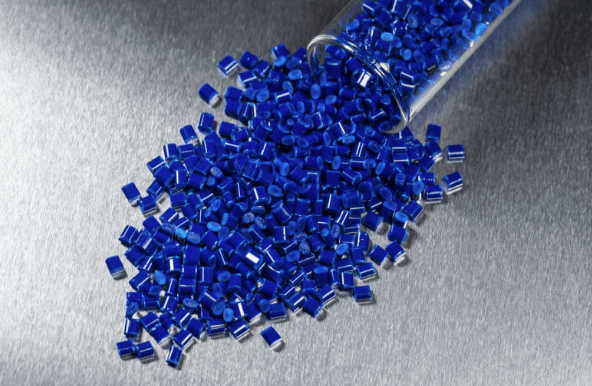
Selecting the right thermoplastic material is crucial in order to get the end products you expect.
Strength, flexibility, thermal properties, flow rate, tolerance control…these are just a few of the important considerations we make in order to choose the optimum injection molding material for each job. Naturally, cost is also a huge factor: you don’t want a cheap material that doesn’t meet your standards, but you also don’t want to waste money using a premium material with unnecessary performance characteristics.
In other words, the question of, “What is the best injection molding material?” isn’t always straightforward, or easy to answer.
At World Class Plastics, Inc. (WCPI), expert material selection drives the success of every project we undertake, balancing performance requirements with cost-effectiveness to deliver optimal results for our clients across diverse industries. Backed by decades of experience molding parts for automotive, appliances, aviation, electrical, dental and medical, and industrial OEM applications, we’ve developed a deep understanding of how different resins perform in real-world conditions.
Understanding the basic performance attributes of popular thermoplastic materials helps you make a better-informed decision when it comes time to orchestrate your next injection molding project. Here’s an overview of the most commonly specified thermoplastics, delving into how WCPI typically employs each material within specific industry applications.
The Seven Major Injection Molding Thermoplastic Materials:
Polypropylene (PP): The Versatile Workhorse
Polypropylene ranks as one of the most widely used thermoplastics in injection molding, and for good reason. This cost-effective material offers excellent chemical resistance, retains its shape after flexing or bending, and features a relatively high melting point. PP resists moisture and water exposure without degrading, making it ideal for applications requiring repeated washing or exposure to liquids.
For appliance manufacturers, polypropylene is a go-to choice for dishwasher components, refrigerator parts, and kitchen gadgets where food contact safety, durability, and cost efficiency are essential. In the automotive sector, we mold PP into clips, fasteners, and various under-hood components that must withstand temperature fluctuations and chemical exposure. The material’s flexibility makes it particularly well-suited for living hinges and snap-fit assemblies. Polypropylene is also fully recyclable, supporting sustainability initiatives across industries.
Acrylonitrile Butadiene Styrene (ABS): Balanced Performance
ABS delivers an excellent balance of toughness, rigidity, and surface finish quality. Its relatively low melting point makes it easy to process, while its butadiene content provides exceptional impact resistance even at low temperatures. The styrene component imparts a naturally glossy finish, and ABS accepts colorants readily, allowing for vibrant product aesthetics without secondary finishing operations.
Industrial OEMs frequently specify ABS for pump and valve components, plastic handles, and cooling tower parts where mechanical strength and dimensional stability are paramount. In the electrical industry, ABS housings protect sensitive components while maintaining the precision tolerances required for modern compact assemblies. The material’s good machinability also makes it suitable for prototyping before committing to high-volume production.
Acetal (Polyoxymethylene/POM): Precision Molding and Low Friction
Acetal resins are engineering-grade materials known for exceptional dimensional stability, low friction properties, and excellent resistance to wear. These characteristics make acetal ideal for precision mechanical components like gears and moving parts that require tight tolerances and long service life.
For appliance applications, we mold acetal into plastic gears used in various mechanisms where smooth operation and durability are critical. The material’s natural lubricity reduces the need for additional lubricants, extending component life and reducing maintenance requirements. Acetal also maintains its properties across a wide temperature range, making it suitable for both indoor and outdoor applications.
Nylon (Polyamide/PA): High Strength and Heat Resistance
Nylon is an engineering thermoplastic prized for its high tensile strength, excellent abrasion resistance, and good thermal properties. Glass-fiber reinforced nylon grades offer even greater rigidity and heat resistance, expanding the material’s application range significantly.
In automotive applications, nylon performs well in under-hood components, seat components, and trim pieces where exposure to elevated temperatures and mechanical stress is common. The material’s toughness makes it ideal for door panels, floor rails, and structural components. For aviation applications requiring stringent quality standards and precision, nylon provides the consistency and performance needed to meet demanding specifications.
Polycarbonate (PC): Impact Strength and Clarity
Polycarbonate offers outstanding impact resistance combined with optical clarity when transparency is required. This thermoplastic maintains its toughness across a broad temperature range and provides good dimensional stability, making it suitable for safety-critical applications.
Electrical applications benefit from polycarbonate’s excellent dielectric properties and flame-retardant grades. Light housings for automotive applications leverage polycarbonate’s clarity and UV stability. The material can also be blended with ABS to create PC/ABS alloys that combine the best properties of both resins for applications requiring a unique property balance.
Thermoplastic Elastomers (TPE): Rubber-Like Flexibility
TPE materials bridge the gap between rigid plastics and rubbers, offering soft-touch properties while processing like standard thermoplastics. These materials provide excellent grip, vibration dampening, and seal properties without requiring vulcanization like traditional rubbers. TPE can be recycled repeatedly, unlike thermoset rubbers.
For industrial OEM applications, TPE serves as effective vibration and sound dampening components, seals, and gaskets. In medical and dental applications, TPE’s biocompatibility and ability to be sterilized make it valuable for certain device components. The material’s soft-touch characteristics also enhance ergonomics in handles and grips across various product categories.
Polyethylene (PE): Chemical Resistance and Safety
Polyethylene, available in high-density (HDPE) and low-density (LDPE) forms, offers excellent chemical and bacterial resistance. This makes PE particularly suitable for medical-grade and food-grade applications where cleanliness and safety are paramount. The material is also highly resistant to impact and is one of the most commonly recycled thermoplastics.
Medical and dental injection molding applications leverage PE’s biocompatibility and sterilization capabilities. Food containers and packaging components benefit from PE’s FDA-compliant grades and resistance to moisture and chemicals.
Our Injection Molding Material Capabilities Include:
- Acrylic
- Acetal
- Acrylonitrile Butadiene Styrene (ABS)
- Copolymer Polypropylene
- Glass Filled Plastic
- High Density Polyethylene (HDPE)
- Low Density Polyethylene (LDPE)
- Polyethylene Terephthalate Glycol (PETG)
- Nylon, Filled and Unfilled
- Polycarbonate
- Polyester
- Polyethylene Terephthalate (PET)
- Polyethylene (PE)
- Polyphenylene Sulfide (PPS) (Ryton®)
- Polypropylene (PP)
- Polystyrene
- Polyurethane
- Thermoplastic
- Thermoplastic Elastomer (TPE)
- Thermoplastic Polyurethane (TPU)
- Thermoplastic Vulcanizate (TPV) Santoprene®
How World Class Plastics Optimizes Your Material Selection
At World Class Plastics, material selection is never a one-size-fits-all decision. Our RJG Master Molder II certified engineers work closely with clients to understand the complete application requirements: operating environment, mechanical loads, temperature exposure, chemical contact, aesthetic requirements, regulatory compliance, and budget constraints.
We leverage our relationships with leading industrial plastic supply companies to source engineering-grade materials that meet exact specifications. Our ISO 9001:2015 certified quality management system ensures material consistency across production runs, while our automation capabilities minimize process variability that could affect material performance.
During the engineering and design phase, we conduct material trade-off analyses, considering not just the raw material cost but also processing efficiency, cycle time, tooling requirements, and part performance. Sometimes a higher-cost engineering resin actually delivers better total cost of ownership through longer service life or reduced secondary operations.
Our prototyping capabilities, including 3D printing and milling, allow clients to test material performance before committing to production tooling. This validation step ensures the selected material meets all functional requirements while staying within budget parameters.
With equipment ranging from 50 to 720 metric tons and experience across appliances, automotive, aviation, clips and fasteners, dental, electrical, gears, and industrial OEM applications, World Class Plastics has the expertise and capabilities to guide material selection for virtually any injection molding project. Our commitment to building trust and molding lasting relationships means we’re invested in your long-term success, not just delivering parts.