


When you partner with a custom injection molder, one of the most critical decisions happening behind the scenes involves selecting the right injection molding machine for your specific parts. This choice directly impacts product quality, production efficiency, and ultimately, your bottom line.
At World Class Plastics, Inc. (WCPI), our engineering team’s expertise in machine selection ensures every molded part we produce meets your exact specifications, simultaneously minimizing cost-per-part while maximizing quality.
Why should you care about how injection molding machines work?
Understanding the basics of injection molding machines, and how molders match press capabilities to part requirements, reveals why choosing the right manufacturing partner matters as much as the equipment itself.
To make a case in point, here are a few crucial questions you should ask:
- Does your injection molder seamlessly meet your design needs and volume requirements? If you have to compromise on design features to simplify production, or if you’re dealing with delayed deliveries, the manufacturer may not have the right molding machines for the job.
- Is your molder using optimized molding processes for your specific products? Even if they can meet your volume requirements, suboptimal processes may not be giving you the best cost-per-part, nor the best quality for your dollar.
- Can your production process be further optimized — i.e. cheaper, faster, higher quality results? Meeting your basic needs doesn’t mean you’re not leaving better manufacturability on the table, which could result in higher quality and/or profit margin.
These are a few of the most important questions you should look further into when you cross-shop injection molding companies. Understanding the basics of injection molding machines and processes can be a huge help in that regard.
Injection Molding Machines 101: A Quick Overview of the Process
The basic injection molding process involves three main stages:
- Heating plastic material to a molten state.
- Injecting that material under high pressure into a mold cavity,
- Applying clamping force to keep the mold closed until the plastic cools and solidifies.
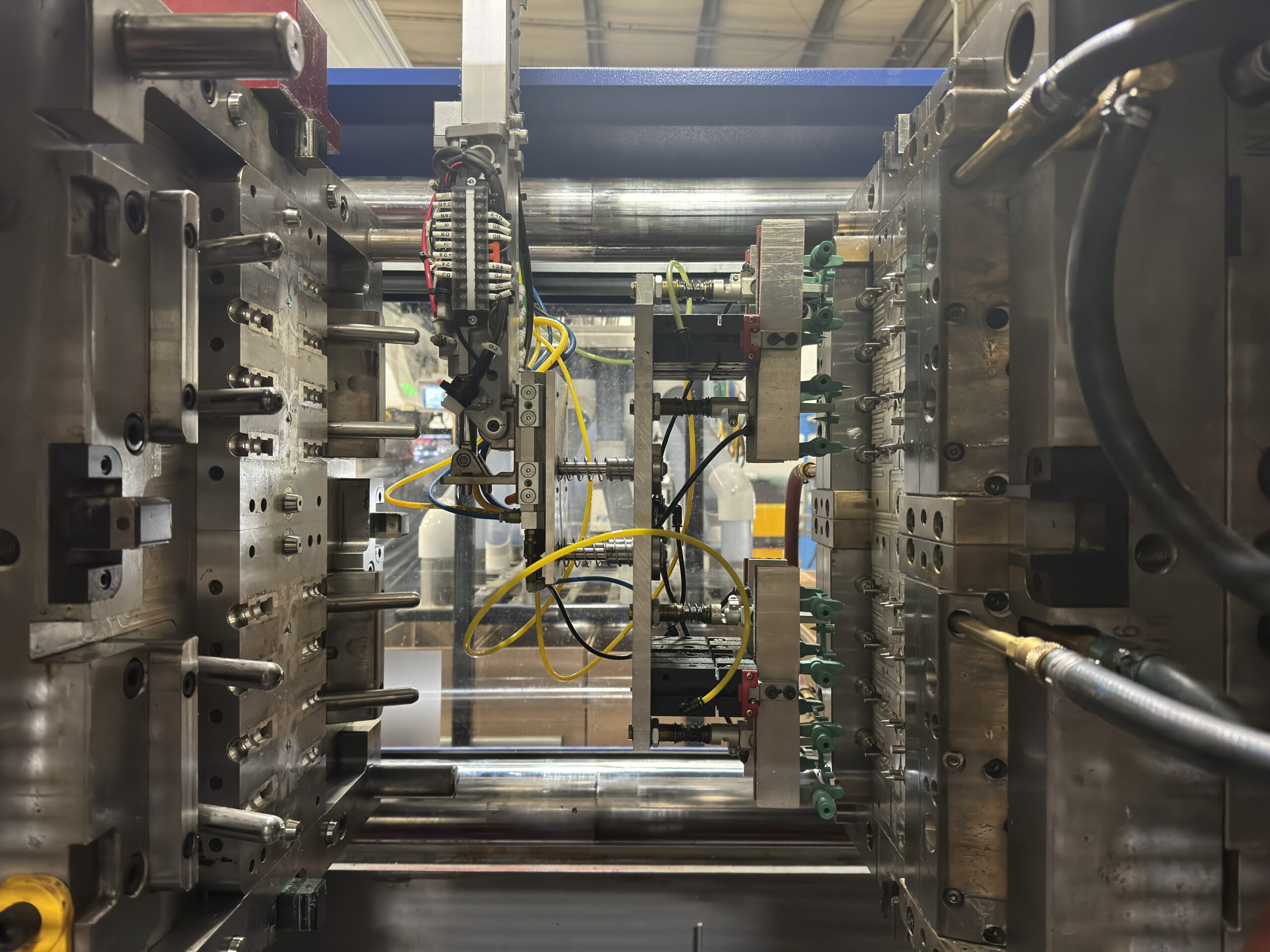
Injection molding machines consist of several key components working in concert. The hopper feeds plastic resin pellets into the machine. The barrel houses a rotating screw that both heats and moves the material forward. Once the plastic reaches the proper melt temperature, the injection system forces it through runners and gates into the mold cavity. Meanwhile, the clamping system holds both halves of the mold together against the internal pressure of the molten plastic.
Different Types of Injection Molding Machines
Modern injection molding machines fall into three main categories based on their power systems: hydraulic, electric, and hybrid.
- Hydraulic machines use hydraulic pressure for both clamping and injection functions. These robust, durable machines excel at providing high clamping forces and have been the industry workhorse for decades. They’re particularly well-suited for larger parts and high-volume production runs.
- Electric machines rely on electric motors and servos to control all machine functions. These presses offer superior precision and repeatability, making them ideal for parts requiring tight tolerances. They also provide energy efficiency advantages and cleaner operation compared to hydraulic systems.
- Hybrid machines combine hydraulic and electric systems, leveraging the strengths of both technologies. This approach balances the power of hydraulic systems with the precision and energy efficiency of electric drives.
At WCPI, our injection molding equipment ranges from 50 to 720 metric tons, giving us the flexibility to handle everything from small, intricate components to larger structural parts—all while maintaining the precision and quality our customers expect.
Injection Molding Tonnage and Clamping Force Explained
No doubt the most important specification when selecting an injection molding machine is tonnage, which refers to the clamping force the machine can apply to keep the mold closed during injection. This measurement, expressed in tons, directly correlates to the size and complexity of parts a machine can successfully produce.
Why does tonnage matter so much? When molten plastic is injected into a mold cavity under thousands of pounds of pressure, that force tries to push the two mold halves apart. Insufficient clamping force results in defects like flash (excess material that squeezes out along the parting line) or inconsistent part dimensions. Too much clamping force can damage molds, increase wear on equipment, and waste energy.
The tonnage calculation starts with the projected area of the part, i.e. the footprint of the molded component when viewed from above. Our engineers multiply this area by a tonnage factor that varies based on the specific plastic material, part geometry, and wall thickness. Typical tonnage factors range from 2 to 8 tons per square inch, with higher factors required for materials with higher viscosity or parts with thin walls. A safety margin of 10 to 15 percent is then added to ensure reliable production.
For example, a part with a projected area of 25 square inches using a material with a tonnage factor of 4 would require approximately 100 tons of clamping force, plus the safety margin.
Key Factors in Machine Selection:
Beyond tonnage, several other specifications decide which injection molding machine is optimal for any given part:
- Shot capacity determines the maximum amount of plastic the machine can inject in a single cycle. This must exceed the total volume of the part plus the runners and sprue that deliver material to the cavity. Running near the machine’s maximum shot capacity can lead to inconsistent results, so experienced molders typically aim for 40 to 80 percent of maximum capacity.
- Injection pressure affects the machine’s ability to fill complex mold cavities, especially those with thin walls or long flow paths. Higher injection pressures help ensure complete filling before the plastic begins to solidify.
- Platen size and tie bar spacing determine the maximum mold dimensions the machine can accommodate. The mold must fit comfortably within these constraints with room for proper mounting and alignment.
- Injection rate becomes critical for thin-walled parts or materials that solidify quickly. A faster injection rate ensures the mold fills completely before the plastic cools and hardens.
The WCPI Advantage: Engineering Collaboration and Superior Quality
Machine selection represents just one element of successful injection molding. At WCPI, we combine the right equipment with extensive engineering support, quality systems certified to ISO 9001:2015 standards, and a commitment to Made in the USA quality that has earned us multiple Certified Supplier Awards from Worthington Cylinders and Supplier Performance Awards from Nifco America Corp.
From initial design consultation through full-scale production, our engineering team works collaboratively with customers to optimize every aspect of the molding process. Whether you need assistance with material selection, mold design optimization, or process validation, WCPI delivers the technical expertise and responsive customer support that transforms good parts into great products.